 BabyCroc
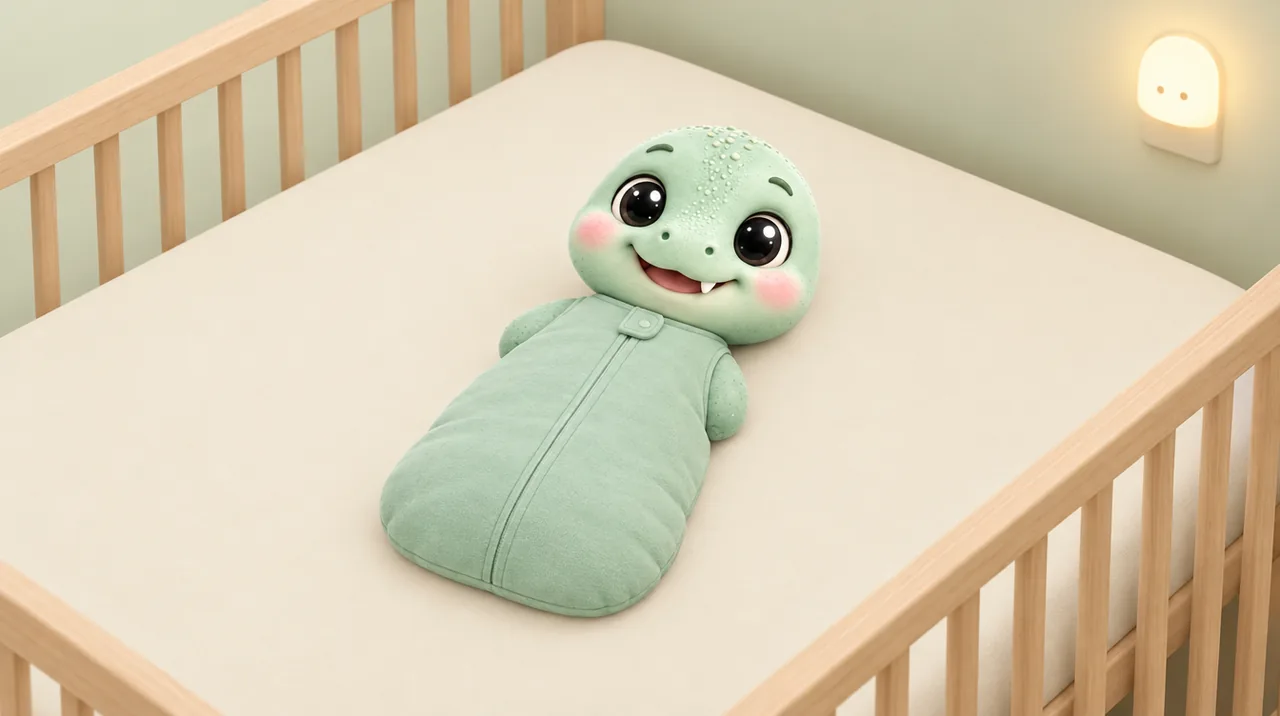
Safe sleep ABCs
Alone, on the back, in a crib: the sleep setup that lowers the risk of sudden infant death.
Safe sleep is a setup, not a personality test. The habits that protect babies are simple enough to repeat at 2 a.m., and they apply to every sleep, including naps and the car ride that turned into a nap. The shorthand many pediatricians use is the ABCs: Alone, on the Back, in a Crib.
Alone, on the back, in a crib
Alone means the sleep surface holds the baby and a fitted sheet. No pillow, no loose blanket, no bumper, no stuffed animal, no positioner, and no weighted swaddle or weighted sack. A wearable blanket or a well-fitted sleep sack is the usual way to add warmth without a loose cover.
On the back means every sleep, for the first year. Side sleeping and stomach sleeping raise the risk of sudden infant death. Babies who can roll on their own can be left in the position they find, as long as they started on the back and the crib is bare. Once rolling starts, stop swaddling. A swaddled baby who rolls to the stomach cannot use their arms to push up.
In a crib means a crib, bassinet, or play yard that meets current safety standards, with a firm, flat mattress. Soft surfaces, including adult beds, sofas, armchairs, and infant loungers, are not safe sleep places. A baby can be held for contact naps while an awake adult is watching. The moment the adult might fall asleep, the baby belongs on the firm, flat surface.
Room sharing, not bed sharing
The American Academy of Pediatrics recommends keeping the baby’s sleep space in the parents’ room for at least the first 6 months, and ideally through the first year. That nearby bassinet makes night feeds easier and is associated with lower risk. Sharing the same sleep surface is different. Adult mattresses are soft, bedding is loose, and a sleeping adult can roll. The risk is higher if anyone in the bed has been drinking, using sedating medicine, or smoking, and it is higher for babies who were born early or small.
If you might fall asleep while feeding, set up the feed in a place where a drowsy slump is less dangerous: a firm surface cleared of pillows, with the plan to return the baby to the crib as soon as you wake. Couches and armchairs are especially risky for accidental sleep, because a baby can slip into a gap.
A quick check before you leave the room
| Check | What you want to see |
|---|---|
| Position | On the back for the start of sleep |
| Surface | Firm, flat, bare except a fitted sheet |
| Clothing | Not overdressed; chest feels warm, not hot |
| Smoke | No one smokes in the home or car |
| Product | Crib, bassinet, or play yard, not a dock or lounger |
Overheating is part of the picture. A room that feels comfortable for a lightly dressed adult is usually right. Skip hats for sleep indoors. If the chest feels sweaty or hot, remove a layer.
Pacifiers, monitors, and products that promise too much
Offering a pacifier at sleep time is associated with a lower risk of sudden infant death. If you are nursing, many families wait until breastfeeding is going well, often a few weeks, before introducing one. If the pacifier falls out after the baby is asleep, you do not have to put it back.
Home cardiorespiratory monitors and wearable vital-sign gadgets are not a substitute for a safe sleep surface. The AAP does not recommend them as a way to prevent sudden infant death. They can also create alarm fatigue, with false alerts that wear a family down.
Be wary of products marketed as making bed sharing or stomach sleeping safe. Inclined sleepers, nest pillows, and crib bumpers have been tied to injuries and deaths. Flat and bare is the standard, even when a product looks soft and expensive.
Daytime practice that supports night sleep
Tummy time is for awake, supervised play, not for sleep. A few short sessions a day strengthen the neck and shoulders so babies can lift and turn their heads. That strength matters once they start rolling. Safe sleep and tummy time are partners: back to sleep, tummy to play.
Car seats are for travel. If your baby falls asleep in the seat, move them to a firm, flat surface when you arrive. A car seat on the floor, or a baby left sleeping in a seat that is not installed in the car, can put the head in a chin-to-chest position that makes breathing harder.
If you are worried tonight
Trust the setup more than a feeling that you should check every few minutes. An awake adult can watch a baby who is ill or brand new, but the sleep surface still stays bare and flat. Call your pediatrician or emergency services for breathing that looks hard: nostrils flaring, skin pulling in under the ribs, grunting, or a blue or gray color around the lips. Those are not “wait until morning” signs.
Sources
- American Academy of Pediatrics. A Parent’s Guide to Safe Sleep. HealthyChildren.org. https://www.healthychildren.org/English/ages-stages/baby/sleep/Pages/a-parents-guide-to-safe-sleep.aspx
- Moon RY, Carlin RF, Hand I, and the AAP Task Force on Sudden Infant Death Syndrome. Sleep-Related Infant Deaths: Updated 2022 Recommendations for Reducing Infant Deaths in the Sleep Environment. Pediatrics. 2022. https://publications.aap.org/pediatrics/article/150/1/e2022057990/188304/Sleep-Related-Infant-Deaths-Updated-2022
- Centers for Disease Control and Prevention. Helping babies sleep safely. https://www.cdc.gov/sudden-infant-death/sleep-safely/index.html
- National Health Service. Reduce the risk of sudden infant death syndrome. https://www.nhs.uk/conditions/baby/caring-for-a-newborn/reduce-the-risk-of-sudden-infant-death-syndrome/
This guide is general information for families, not medical advice, and it is not a substitute for your pediatrician.
This Baby handbook page is general information, not medical advice. When in doubt, call your pediatrician.